

In keeping with reading authors of the countries in which I am travelling in order to get a more in-depth feel for the country or the national character, I have borrowed an e-book by Jón Gnarr titled “Gnarr!: How I became the Mayor of a Large City in Iceland and Changed the World“. An anarchist at heart, and disenchanted with the Icelandic political system, Gnarr managed to create a political party on a whim, win, and become mayor. He used his influence for good and was quite successful. His story is a tale of coming out on top despite enormous odds and includes a bit of old school wisdom – born of his comedic talent and being bullied at school. In this way it imitates the epic narratives or sagas of old.
In the book he pulls apart the political system and how politicians short-changed the Icelandic public during the 2008 GFC as well as pries into the psyche of a nation that is simultaneously viewed as quirky and traditional yet technologically-minded and interested in the processes of ecology and peace. In his role as mayor he encouraged people to become involved in the democratic process as he implies that not being involved means you also make a decision to leave the process up to a select few and their sometimes narrow thinking rather than the majority who may feel differently but do nothing about changing things.
He also talks about a very Icelandic past-time – swimming and hot tubs. Hot tubs are apparently the place to discuss matters serious to sublime and all in between in Iceland, as everyone’s social class is unseen in a hot tub.This theory was substantiated when our tour guide into the glacier told us that she discusses serious ecological questions with people in hot tubs.
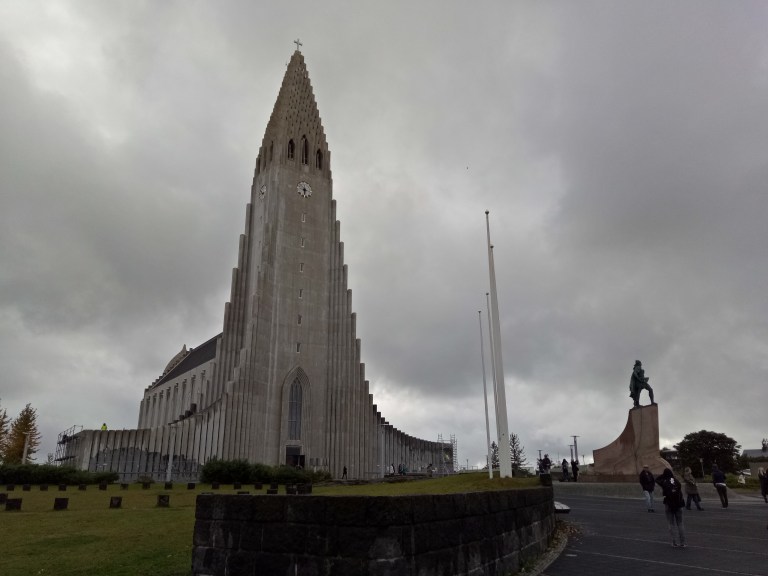
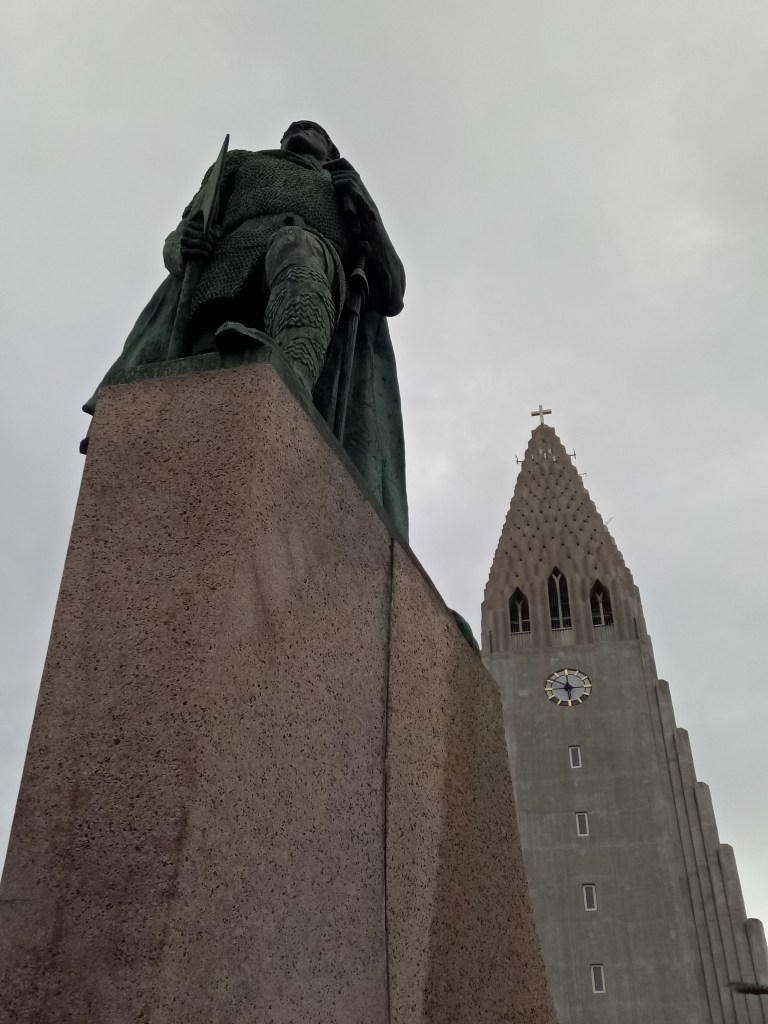
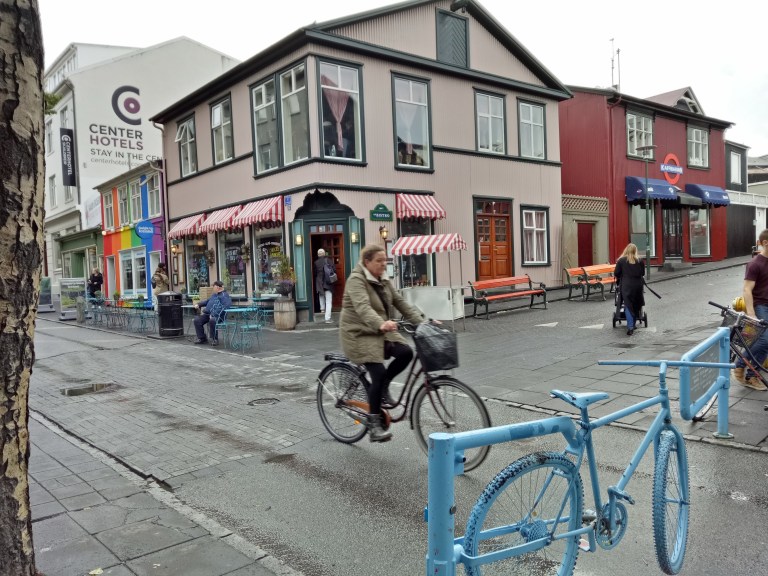
But this post is about sagas. Not long drawn out dramas or rigmarole but the original meaning of sagas: legends of heroes’ adventures as in the Icelandic Sagas – stories of Iceland’s history and settlement. I make my way through the prettiest town centre I think I have ever seen, with a quick visit of the well-known landmark, the tall, imposing Hallgrimskirkja Church fronted by a statue of Leifur Eriksson (purportedly the first European to ‘discover’ America), and head toward the seafront to a small white building, the Saga Museum.






Iceland is famous for its sagas so it is also apt that Reykjavik is a UNESCO city of Literature, including having a Nobel Prize for Literature winner, Halldór Laxness (we drive past his home on one journey and I almost step on a plaque dedicated to him that is embedded in the footpath on my way through town) for his book Independent People. In fact many inhabitants, we are told, are authors or have a story in them. This is not surprising given that Icelanders are raised with the moral lessons learned from fairytales about trolls and elves, as well as the sagas themselves being so intrinsic to their lives.
Originally an oral tradition of stories handed down, it is possible to view ancient saga manuscripts. Instead I opt for the re-creation of the sagas in the Saga Museum. It depicts episodes from the Viking history of Iceland. A lot of it involves killing and feudal bloodshed of course, but Vikings were also farmers too. And during my stay, many Icelanders I meet refer to specific snippets of these sagas.
It turns out that Icelanders are originally from Norway, Ireland and Wales: 75% Nordic from Norwegian vikings and farmers, and 25% from Irish/Welsh monks as slaves or women taken as slaves/wives (so the storyline from the television series Vikings is realistic). Vikings settled Iceland around late 800s and initially included those who didn’t want to submit to King Harald of Norway or were outlaws, or free farmers. That is why a free farmer, and later chieftain, called Ingólfur Arnarson settled here after throwing his valuable high-seat pillars overboard to float and land, and in this way letting the Norse gods decide where he would live – a bay where steam issuing from fumaroles could be seen, called smoky inlet or Reykjavik.


At the end of the museum tour you can dress up as a Viking. The sword and shield are lightweight wood and easy to carry but I find that the iron mesh of the chain mail is ridiculously heavy. I’m pretty sure there were Viking shield-maidens fighting alongside the men, right? What is that about me and dressing up anyway? Giving in to the kid inside me, I think. Plus, I can do what I want and be anyone I want.
I loved reading about the saga history. But I also love the feel of the town that enjoys graffiti as an art form and has the most delicious fish and chips. I head back to my new hostel and am in bed by 8.30 p.m.even though it is still daylight outside. I am in for another big tour day tomorrow. So much to see …


 Jen's Magic Carpet Ride