
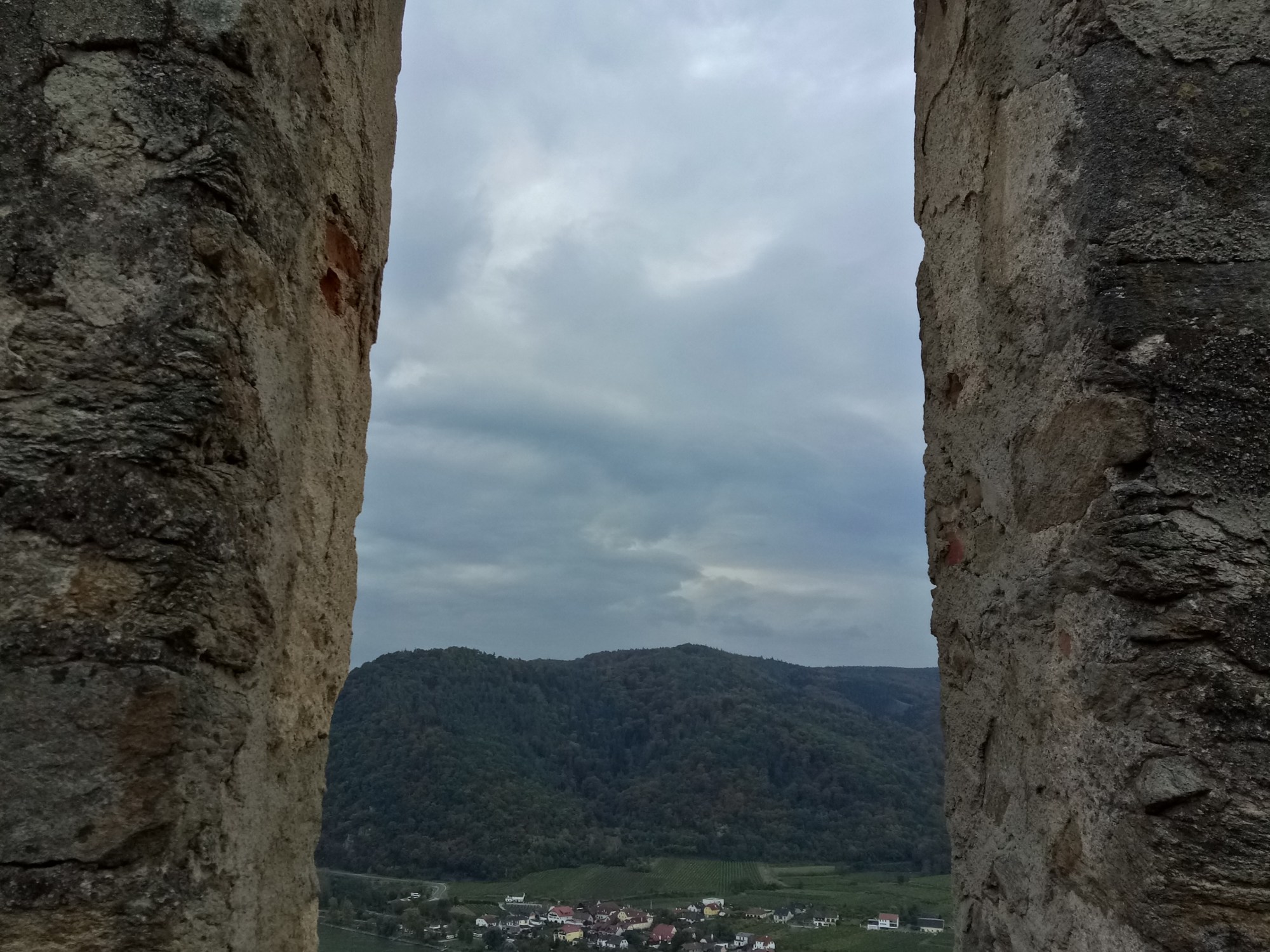
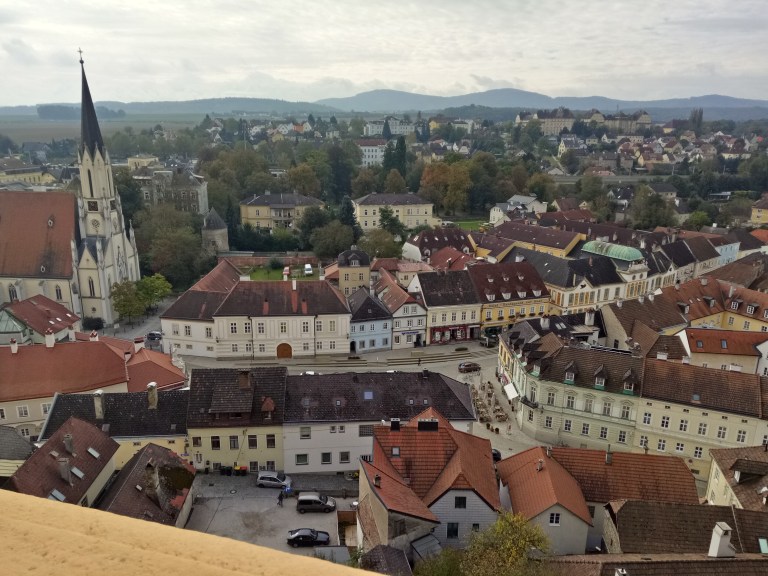
The Austrian countryside where I am staying is filled with rolling hills of crops interspersed with pretty villages nestling at the base of the easternmost Alpine foothills. It is also close to vineyards bursting with grapes ripe for picking. I am looking forward to sharing more Sturm with my hosts but before that, some ancient history. Driving on the winding road through country close to the wide, grey Danube River, I can see river boats filled with tourists snaking along on one side of me, the other is glimpses of vineyards and bluffs charging right into the water it seems. The distant hilltops are dotted with monasteries. We visit the jewel in the crown of Benedictine monasteries here – Melk Abbey – still used as a school and monastery today. It overlooks the Danube, and its buildings and grounds are a masterpiece of Baroque elegance, with a library to die for. Unfortunately, photos of the library were not allowed – suffice to say that it surpassed the high bar set by one of my dream libraries, that of Belle’s library in Disney’s Beauty and the Beast.




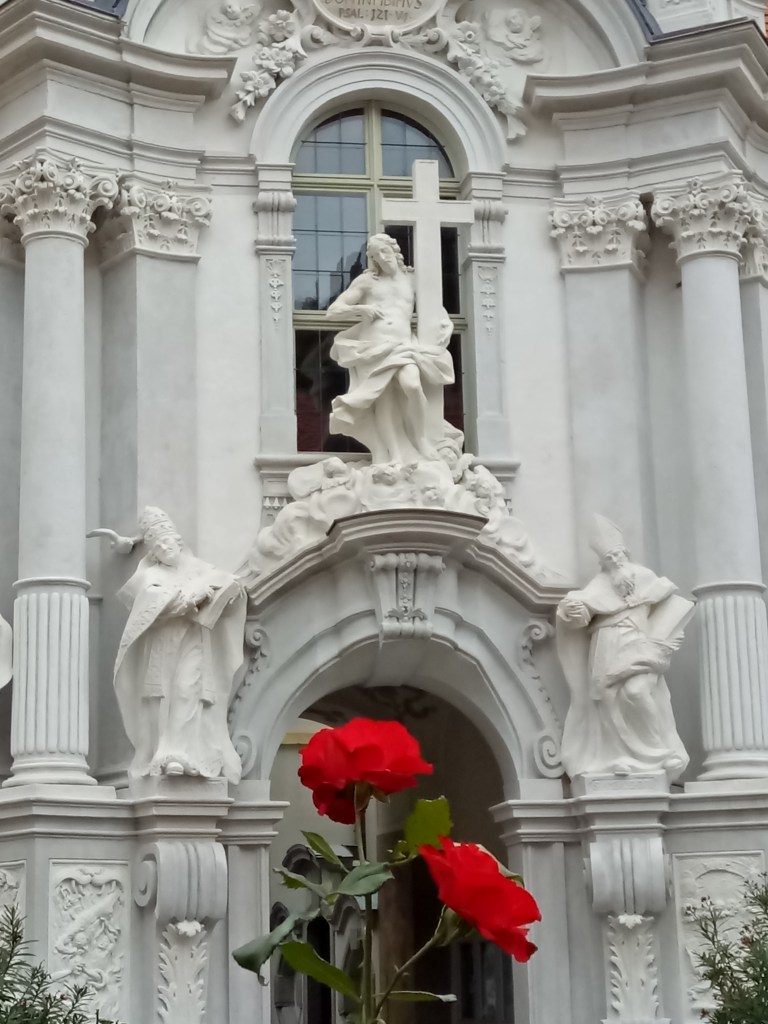
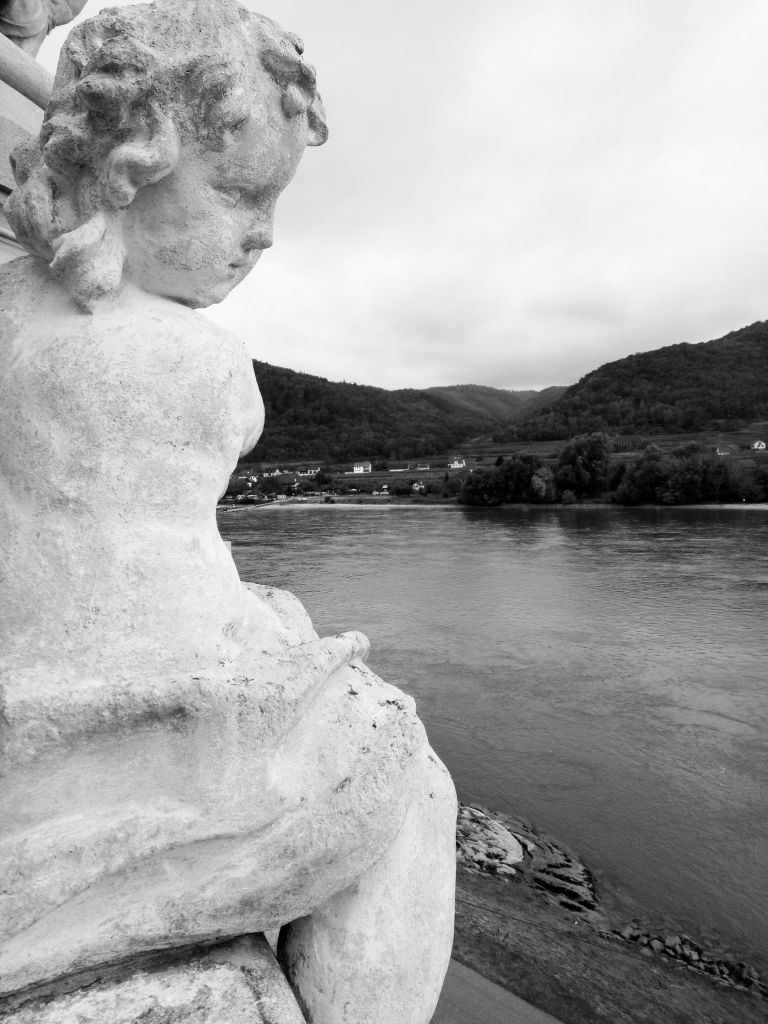
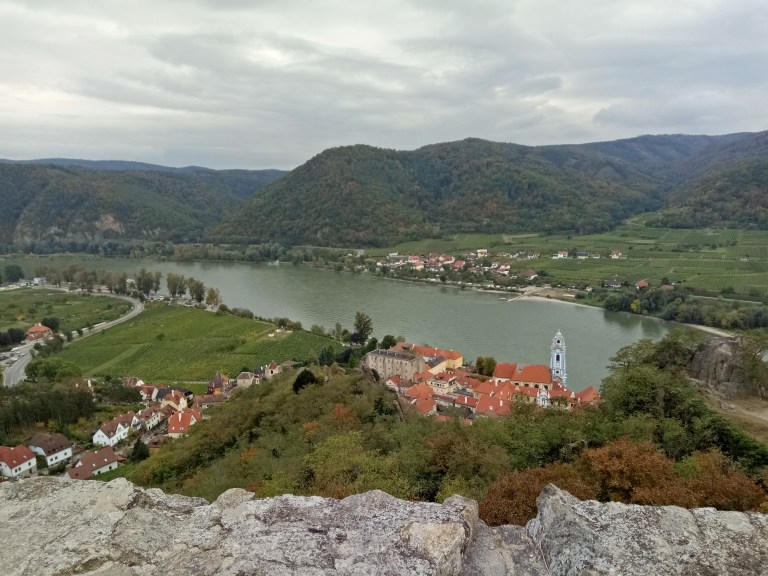
Next, we drive through the Wachau valley demolishing a sumptuous lunch served by waitresses wearing traditional Austrian dresses or dirndls, swipe a bunch of grapes from a vineyard to munch on (don’t tell anyone), then head to the medieval village of Dürnstein whose most famous captive held for ransom in the castle in the Middle Ages was Richard the Lionheart. We gape at the village church first, whose carvings of angels appear to be glancing down at the river, watching it go by season after season.




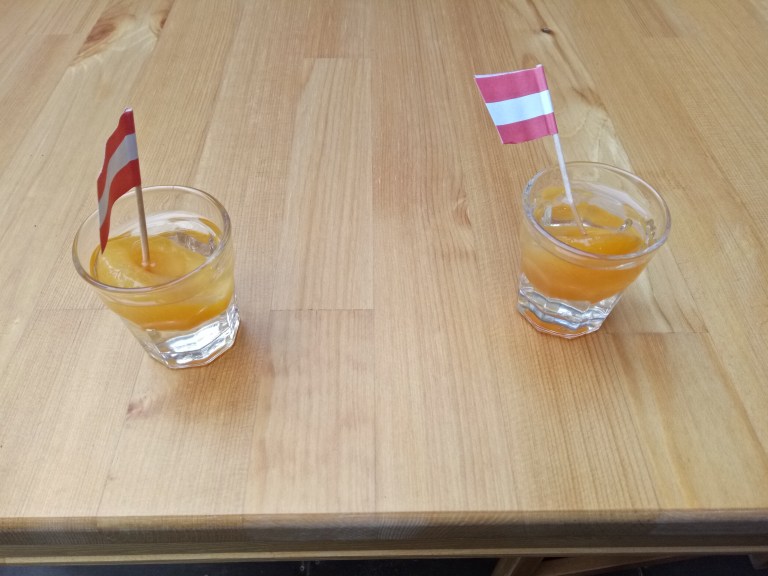
Castles are obviously for strategic viewpoints and this was no exception. Its battlements overlook the Danube in both directions, and it takes a full half hour to climb up to them, especially after a big lunch and two glasses of wine. Only a few walls remain but after the strenuous effort of reaching that elevation, I want to go higher. Where is my fear of heights? Has it dissipated altogether? I breathe in the view. Richard the Lionheart would have enjoyed it despite his temporary incarceration, resolved when a goodly sum of gold was paid. On the way back down we reward our efforts with a shot of some apricot schnapps that warms the insides. Then it is home, followed by another outstanding meal from my hosts.




The next day, another dose of history, this time more ancient – Roman. I first heard about Carnuntum on a television show about the use of radar underground to uncover layers hidden by topsoil. In this area, farmers would be tilling the soil for sowing and come across Roman coins or paraphernalia from 2000 years ago. What the radar and archaeologists found were remnants of a gladiatorial training ring and housing on the outskirts of the city. It was an important Roman city situated on the Danube and a strategically important far-flung outpost. Not much is left of the city but there is a display, museum, and reconstructed village incorporating original buildings and roads. I have been to Rome when I was quite young but I cannot remember the impact of seeing something this old. On visiting Carnuntum, I am left speechless.


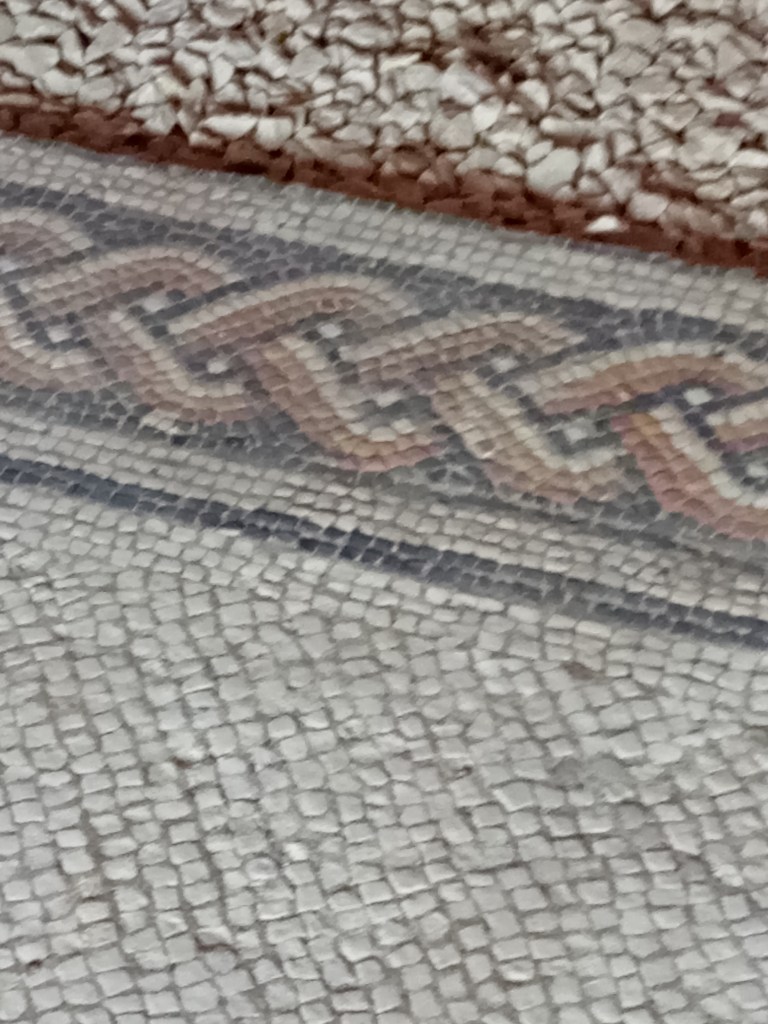


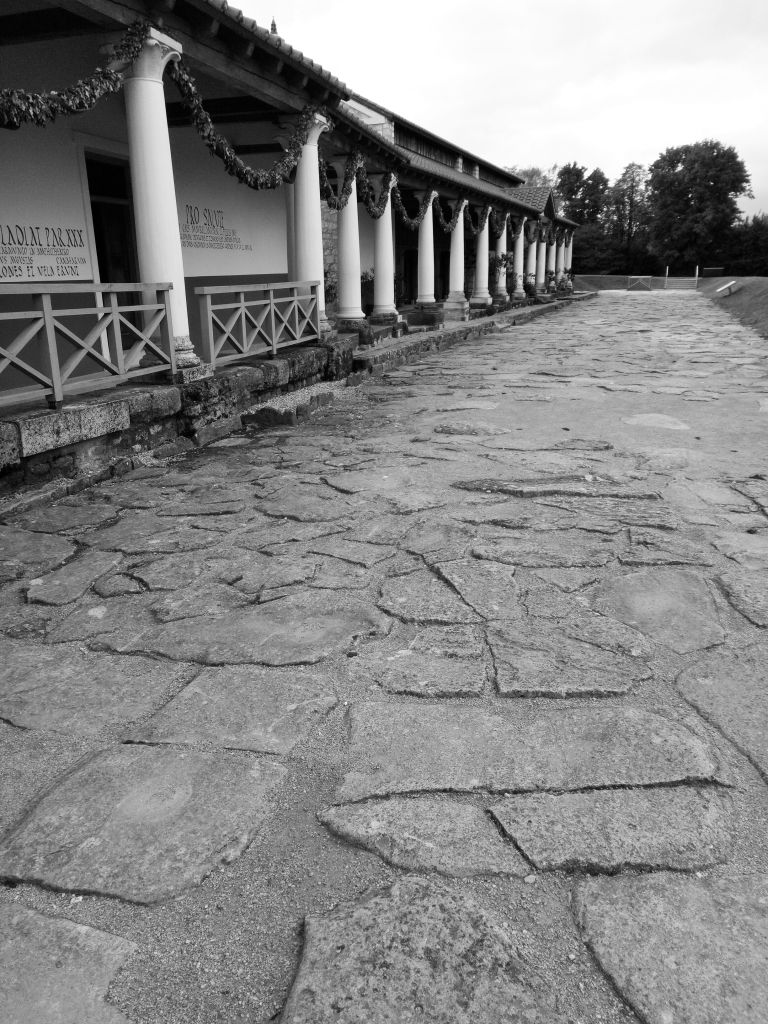


Along with the reconstructed buildings are individuals dressed in appropriate garb, on hand to expand our knowledge of customs and way of life. What is left are two houses – one of middle class and one of upper class with an adjoining public baths and marketplace. It is fun to walk through and pretend we are rich Romans buying fresh produce from the market, lazing on beds, or sitting in sauna-like bathrooms – even visiting the toilets – and getting a glimpse into their daily life, as well as knowledge of underfloor heating and sewage systems that they invented. Inside one of the villas are remnants of detailed mosaics, and the Roman roads are wide and flat, sufficient for loaded carts to travel in each direction. It is fascinating. But it is time for Sturm.
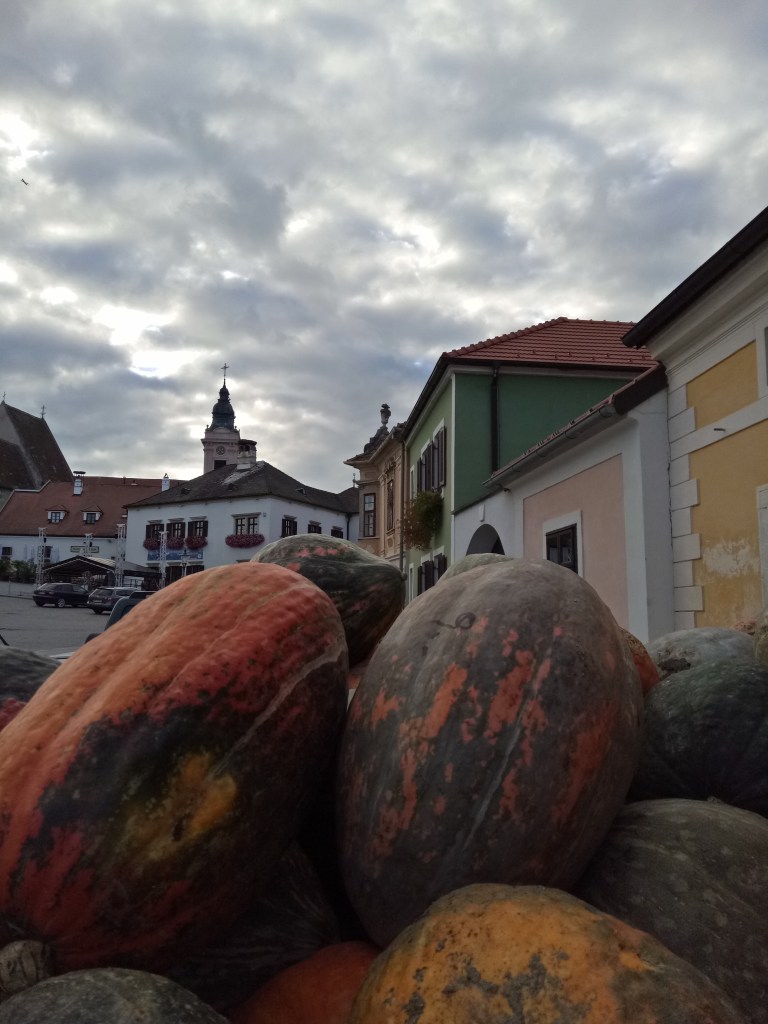
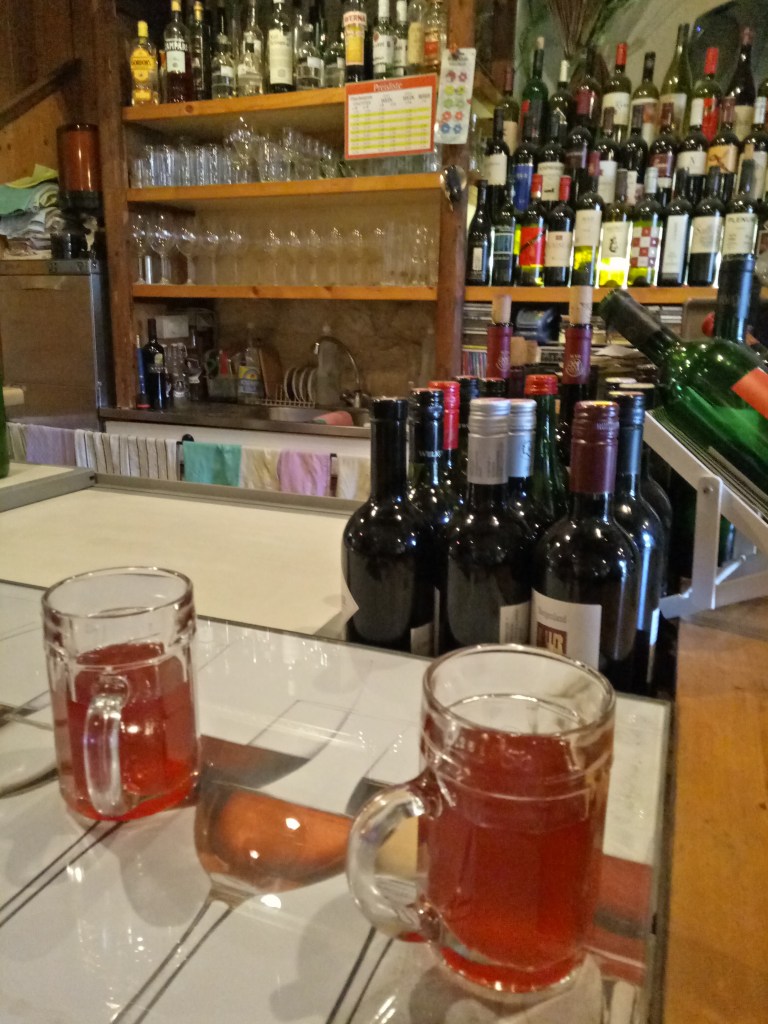
We travel to the vineyard area where vintners store their wine in huge grass covered underground caverns that look like hobbit holes. Here the wine can be kept cool. Some of these buildings have restaurants attached open to the public in which you try the wine of that vintner. It is lovely to sit outside in the warming autumn sunshine and eat lunch and drink wine and Sturm under the vine leaves that are only just starting to turn red. Next is a quick visit to a spot that is popular in summer for swimmers and windsurfers – Neusiedl Lake. It is picturesque and the nearby town on the other side of the reed covered waterways filled with birdlife has a story of storks nesting on chimney tops who return year after year. After more Sturm, this time a delicious red one, it is time to go home.




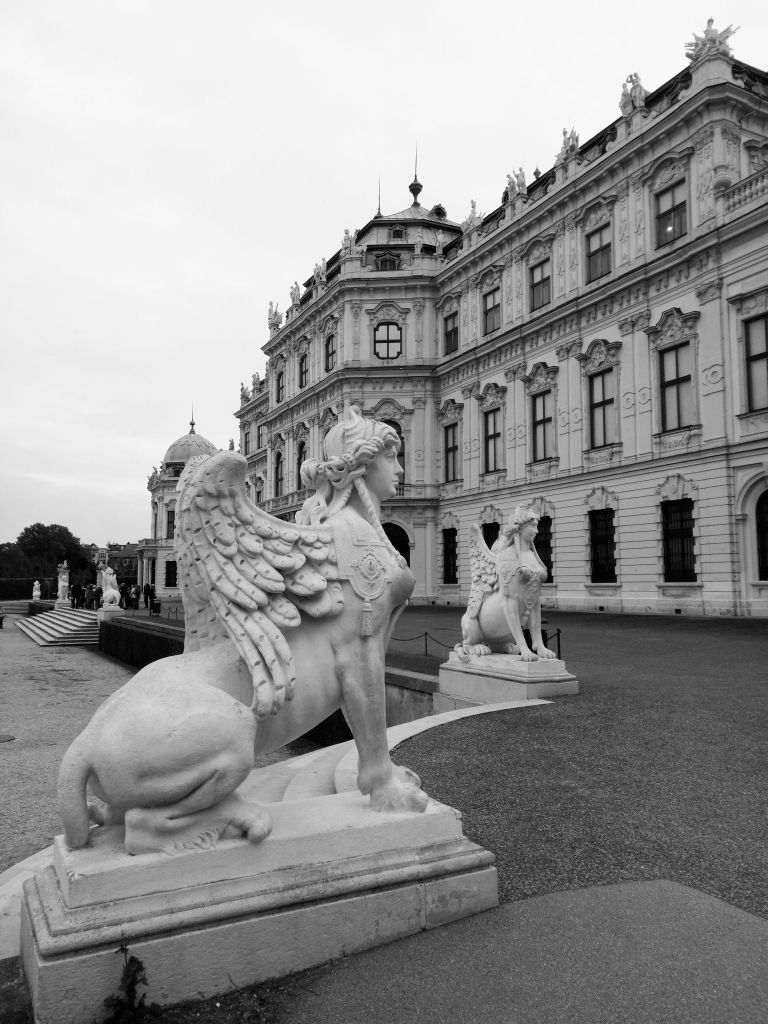
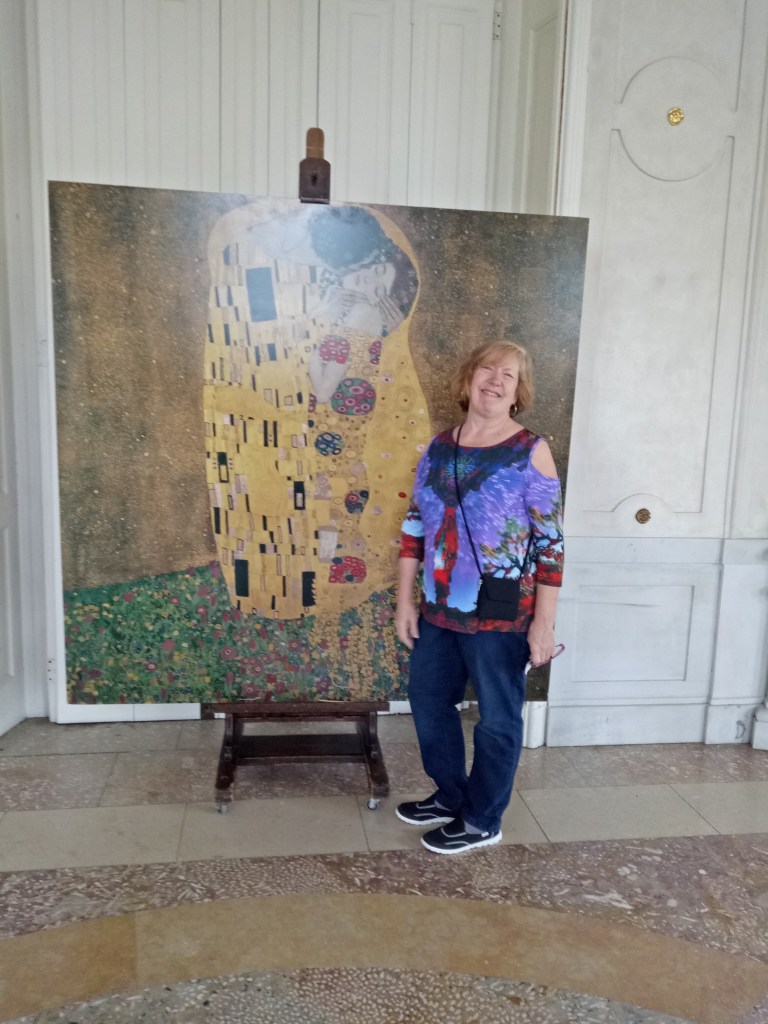
I have seen so much and am appreciative of all my Austrian hosts giving me their love, time, alcohol, food, and expertise. There is just enough time to squeeze in a visit to the Belvedere Palace back in Vienna before my flight the next day and relish the former glory of the Hapsburgs once again. Here is where famous artists have their work on display including the well-known Klimt and other favourites. I fall in love with the work of Waldmüller whose artistic rendering is so precise it resembles photographs.




I would love to learn German. It has similarities to English in some ways. I have managed to pick up some understanding just by listening to the nuances and inflections when people speak as well as the use of Bitte, Danke etc when asking for things, including the all important hot chocolate, and of course, Sturm. I am taught to say the word for toilet (you can also say ‘toilette’) which sounds similar to Klaw, and I have fun with that word screwing my face up as a joke. I already knew how to say only a few words, three of which are ‘I love you’.
Ich liebe dich, Austria.
 Jen's Magic Carpet Ride