
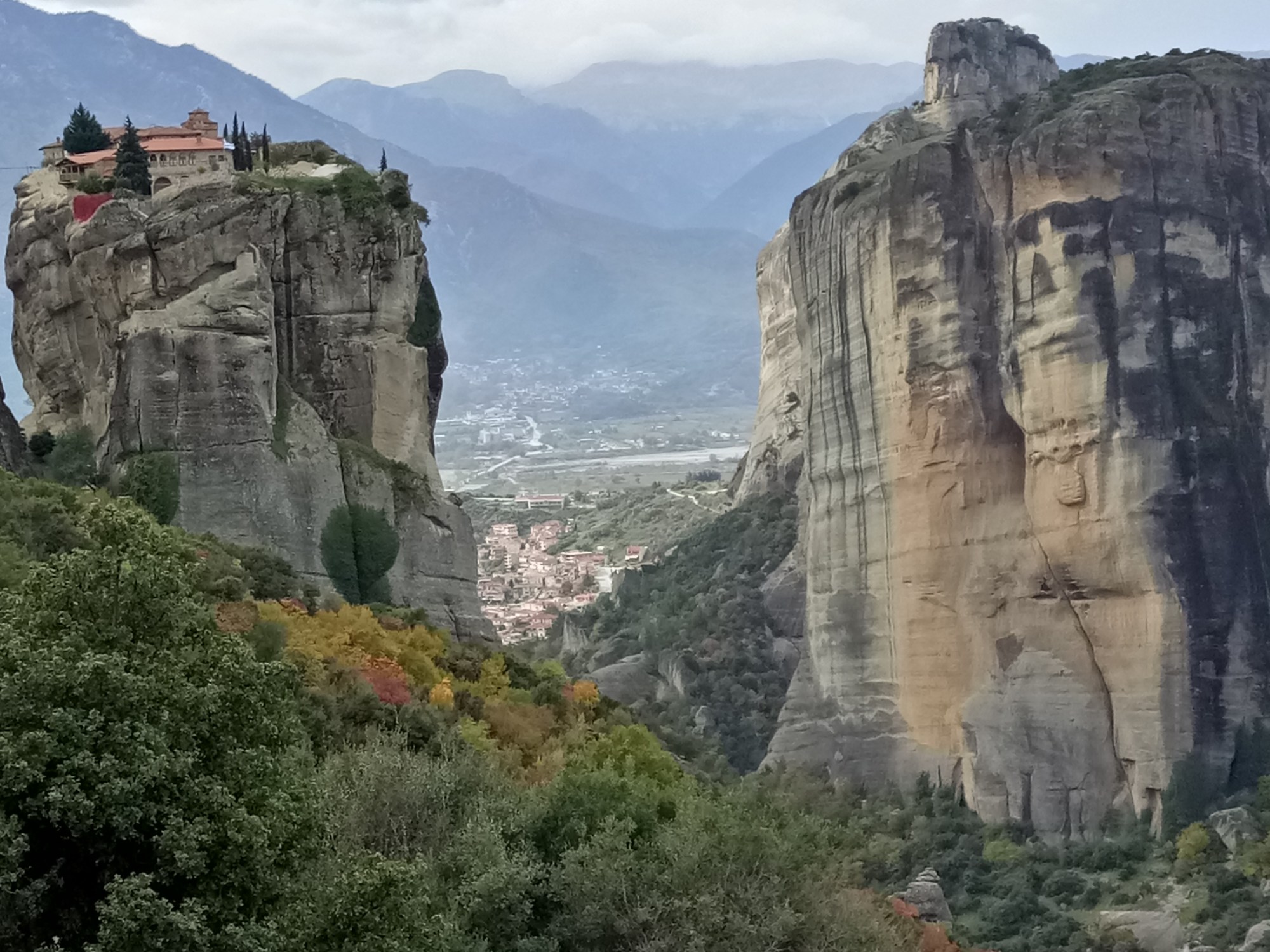
I arrive in the dark to Meteora in northern Greece. From storing one suitcase at Athens airport after arriving from Santorini, it has taken over seven hours, three train rides costing €40, two taxi rides costing €30, and a missed connection with a frantic breathless run across train bridges and steps because they did not announce the station but when the taxi drops me there I find that there are two stations with the same name (one urban and one regional) but the regional one is 300 metres away and up three flights of steps with my single suitcase (fortunately) because the lift is not working, to finally arrive at my B&B exhausted and hungry at 8 p.m. It is a simple room with a leaking shower and a hard bed in a tiny and sleepy village outside of a small town called Kalambaka, about three kilometres from Meteora.
I have found many people can speak English in Greece which is wonderful because Greek lettering is like hieroglyphics to me though over time I begin to decode some symbols and pronunciations, and I learn the basics of good morning/thank you etc. Most people, that is, except my hostess at the B&B, so there is a lot of sign language between us until her son or daughter appears and can translate.
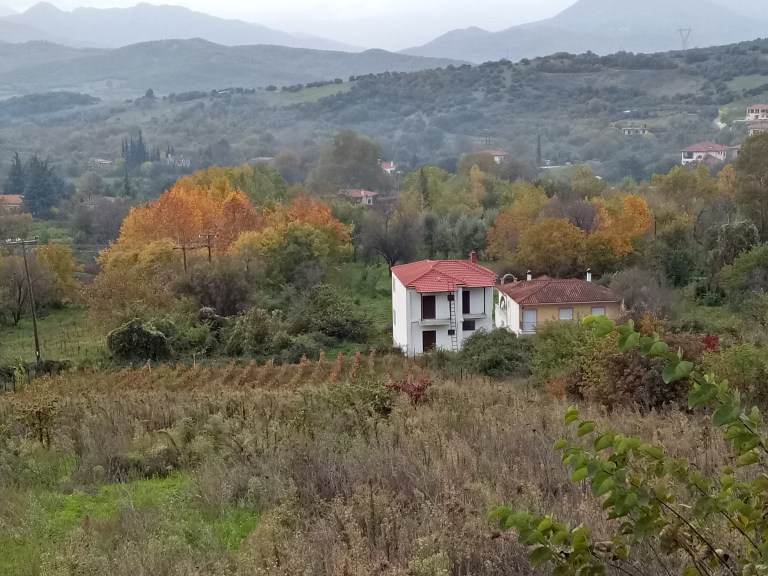
The morning sun and local cock crowing however bring a fresh perspective and a fabulous view from my terrace of the village filled with olive trees, vineyards, and cotton fields, and the nearby mountains and rocky outcrops that make Meteora unique. At breakfast, after checking the weather forecast, I decide to do a tour the first day knowing that it may rain on days two and three. The friendly voice on the phone turns out to be a fun-loving blue-eyed Greek with a big personality, who along with our driver and only one other passenger – a lovely older lady from Chile – takes us on what turns out to be a personal tour of Meteora.
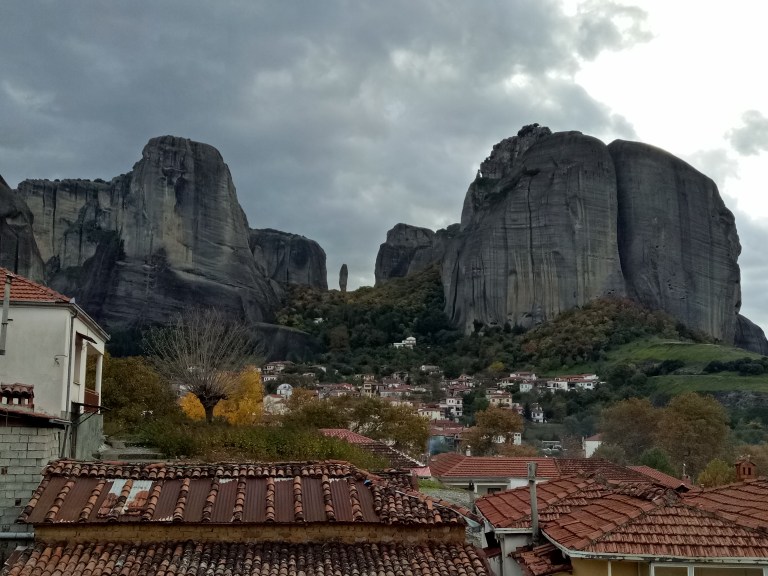
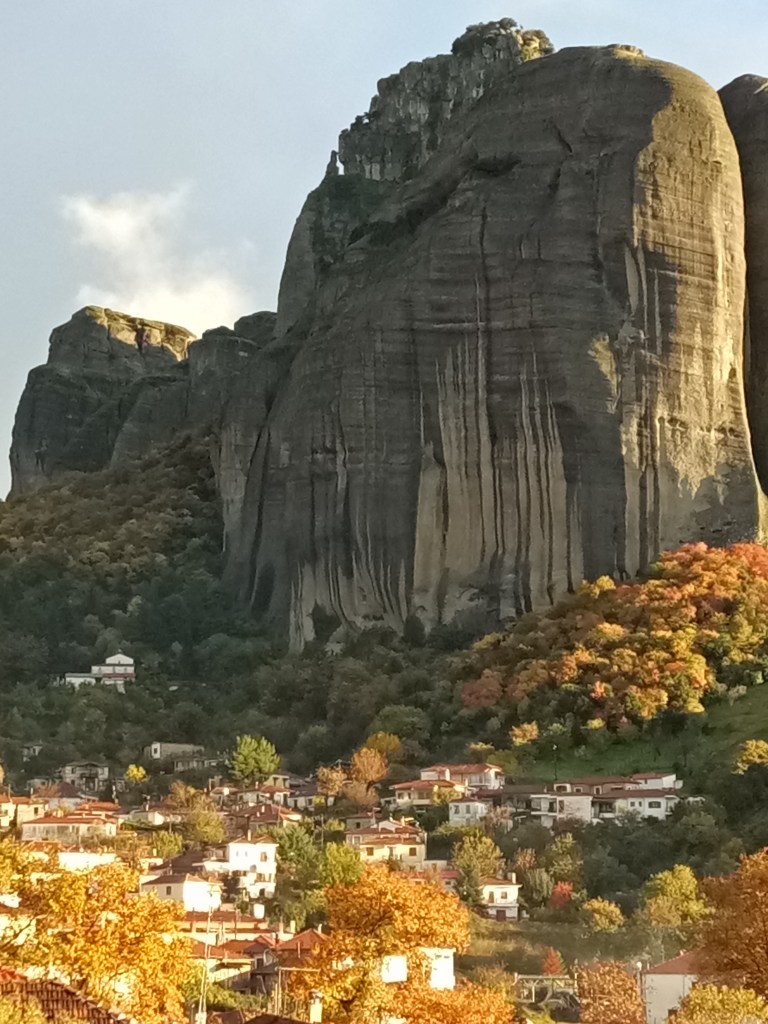
I am not an expert on geography or geology but these distinctive rocks appear to sprout from the ground into tall cylindrical formations. Of course, it turns out that it is the opposite; a wearing down by erosion and water. As our guide quotes, “they are ‘Earth suspended in the Air'”, which I think is a lovely epithet. To add to their remarkable and outstanding beauty is the fact that approximately 500 years ago a religious order built monasteries atop about ten of these pinnacles. This is what makes them so extraordinary. This is why I am here. At the same time, facing my fears full on.
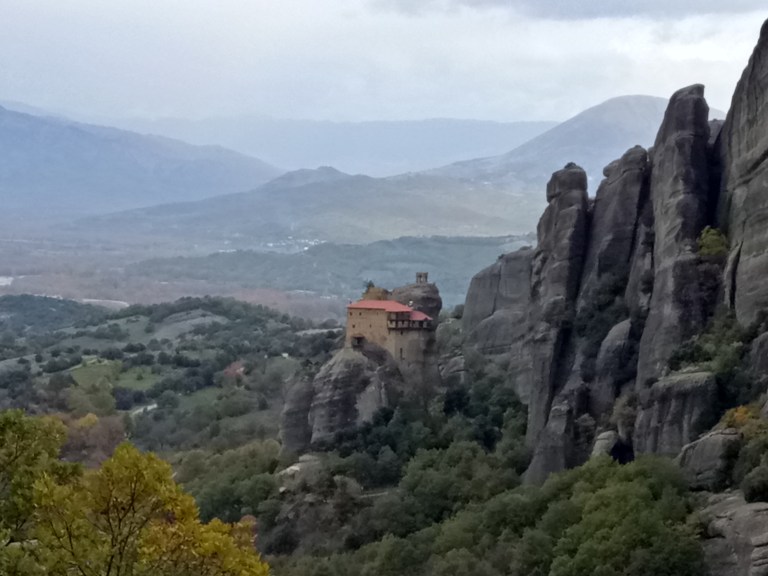


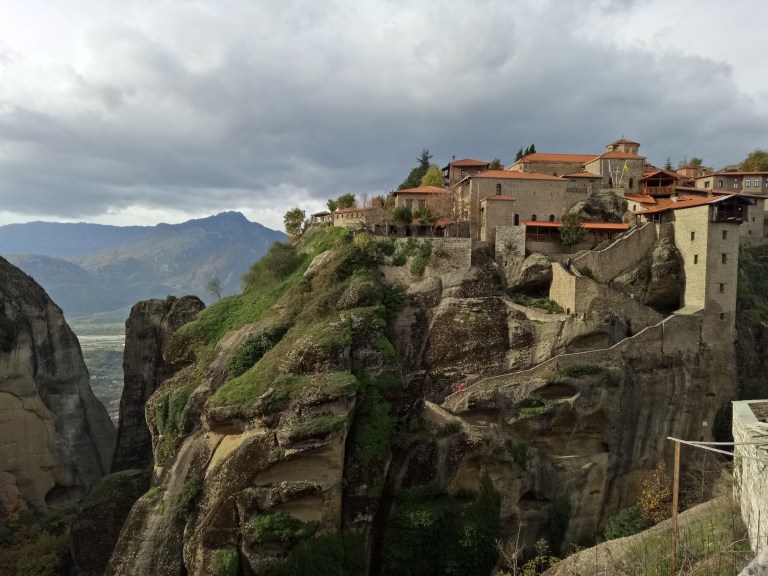


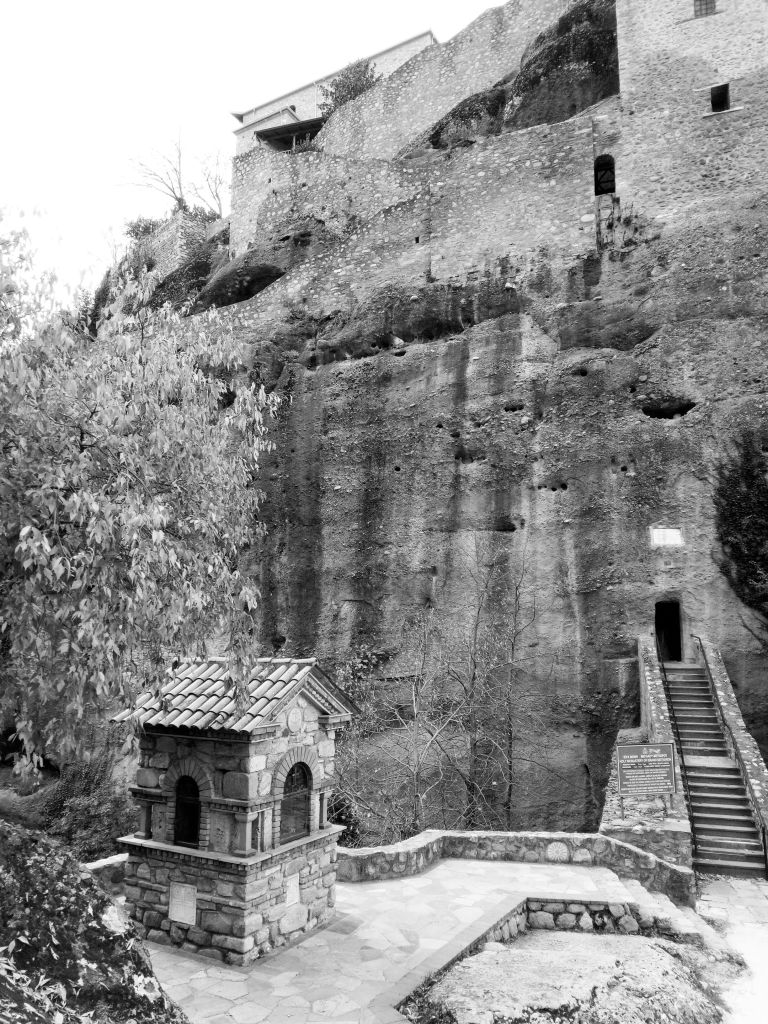


Once you do climb to the top, the monasteries are simple with ornate miniature churches and little gardens with Greek Orthodox priests going about their business. The views from up here are breathtaking. In Santorini I had my Tomb Raider 2 moment when I stood at the site of the opening scene, facing my fears to look over the edge and down to the ocean far below. This time I have my James Bond moment like in For Your Eyes Only where I stand in one of the monasteries and gaze over the landscape and town below, though standing at least two metres from the drop. My fear of heights is being overcome but I still cannot bring myself to actually stand right next to a sheer cliff with only a flimsy looking metal railing between me and air. But also, I wanted a photo to prove to myself that I could stand that close and not freak right out.


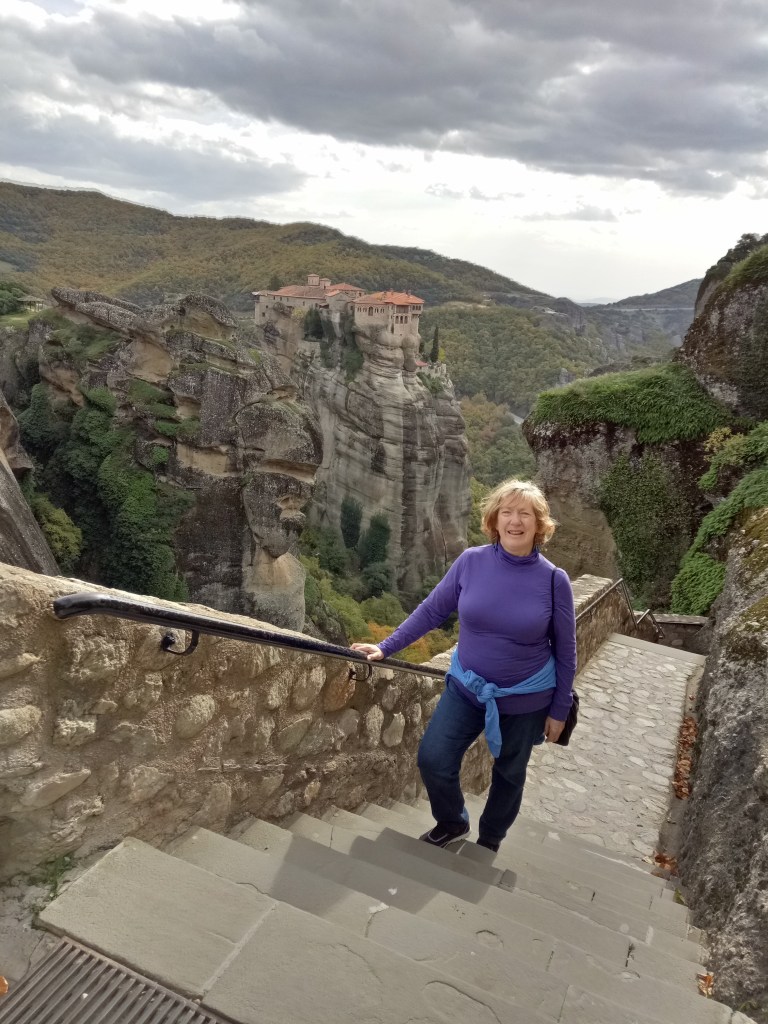


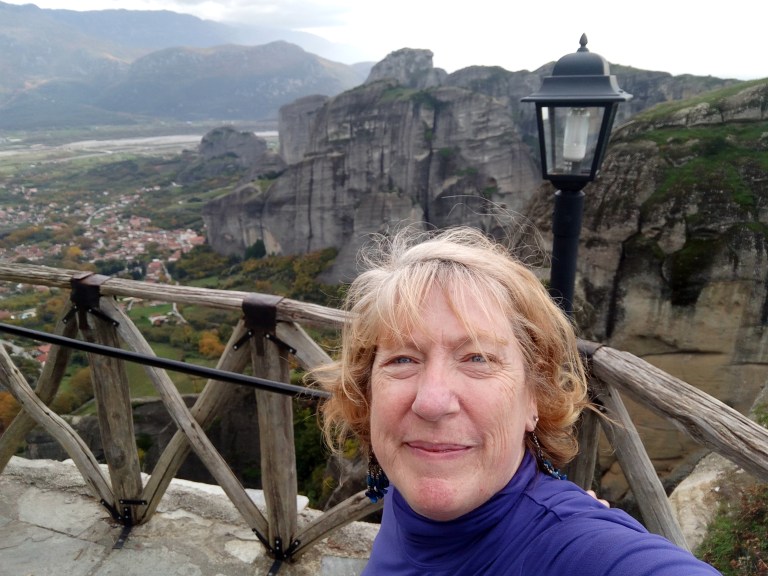
The first question one asks is: how do you get up to them? This question is answered once my buddy tourist and I are dropped at the entrance to one. They lower a basket.
Well, they used to. This method is still used but not for people. They built a kind of flying fox as an upgrade but much later cut steps into the rock. These stairs tunnel into or zigzag around the pinnacles, so when I am on the outside it is confronting and takes a tremendous effort for me to haul myself up them.
Each monastery charges a small fee to cover costs of upkeep. Personally, I think they use the money to buy the most atrocious coloured and patterned fabric to make sarongs – which all women have to wear regardless of leg coverings – and without which you cannot go one step without a petite old woman dressed entirely in black screeching at you, freezing the blood in your veins and stopping you in your tracks. I only made that mistake once.
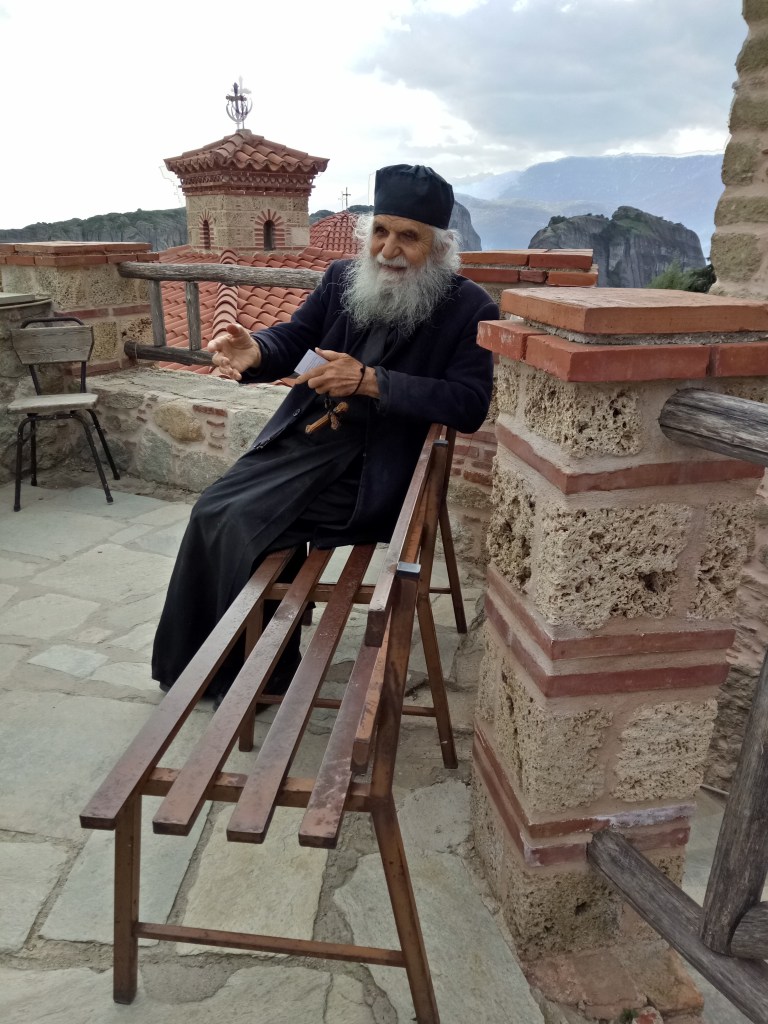


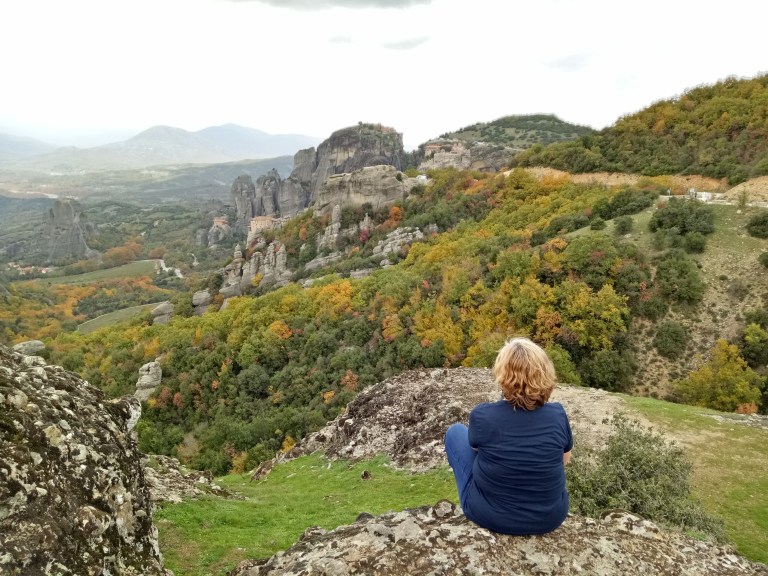
Each monastery we visit appears to be suspended there by sheer will of the foundations and trust of the occupants. It is mesmerising and fills me with awe.
After our tour my Chilean friend Maria and I decide to stop for a bite, and later I walk the three kilometres back home; a nice stroll. We end up spending four hours together talking. I find out she is from near Santiago and we discuss Chile, my travels, and her love of Greece among other things. It strikes me as funny to find myself as an Australian in a remote Greek town lunching with a Chilean woman having a conversation in Spanish.
The next day dawns with soaking non stop rain. But I have to go to town to buy my bus ticket for two days later. I ask, through sign language, to borrow an umbrella from my hostess. It’s a bit old and bent but it works. I begin to trudge toward town and after about fifteen minutes my shoes and lower legs are completely wet through as if I had been immersed into a puddle. I don’t know if there are any buses and no taxis pass me, so I have no choice but to keep going. Still with two and a half kilometres in the pouring driving rain to go, I decide to try and hitchhike. The first car passes me but the second one slows and stops. Now, I have never hitched before in my life because I am fully aware of the dangers, but I know where I need to go – it is a short drive – and I have had mostly positive experiences with people on this trip and nobody has tried to rip me off or harm me; it may seem naïve to some but I believe that people are essentially good. Also, I am not stupid. Plus I trust myself and know that if it doesn’t feel right, I won’t get in. I have come a long way from the nervous-to-travel-on-my-own person who left Australia three months ago.
The man is a gentleman. He stops and opens the car door for me from the inside and nods a greeting. Straight away I feel it will be ok, and once I am inside and ask “Kalambaka?” he immediately smiles. He is a portly Greek white-haired older businessman and has little English. We chat a bit – the usual where are you from etc – and I find out that he learned German at school not English, which I find interesting. I allow him to try his English on me and wait while he forms his sentences, smiling encouragingly. We reach my drop off point and I thank him with a shake of his hand while saying Danke. He gives me a big grin.
Once I get my bus ticket, I decide to see if I can find a place that the tourist info woman at the airport told me about. I ask and walk but without luck. It is still raining heavily and I am soaked through. As I make my way back to the town centre, having given up, I come across the building by accident. The Hellenic Culture Museum houses an enormous collection of old, well preserved books on Greek culture as well as other texts that were used for teaching in Greece’s primary, secondary schools and universities. Apart from being about old books – some Aesop’s fables and other philosophy texts are from the 1500s and 1600s! – there is a recreated school classroom, where you can write with a quill dipped in ink, displays about Meteora from old travel magazines, and a short video on the morphology of the rock formations in Meteora.


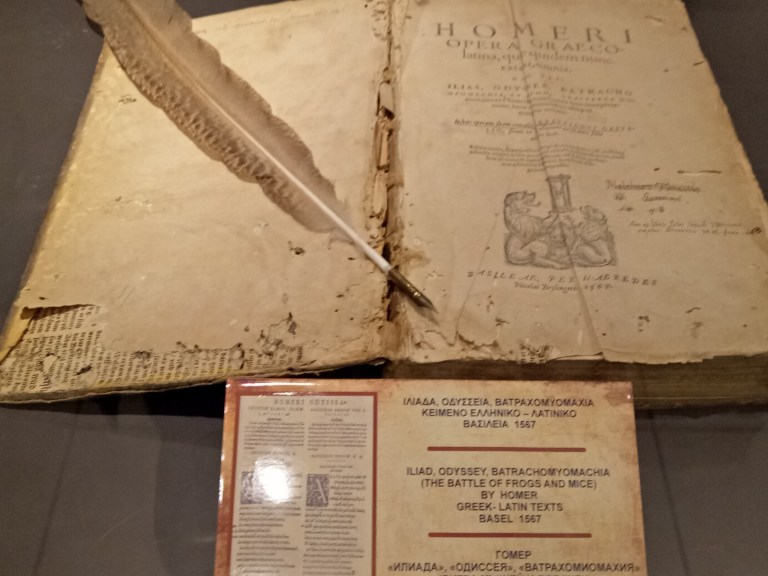
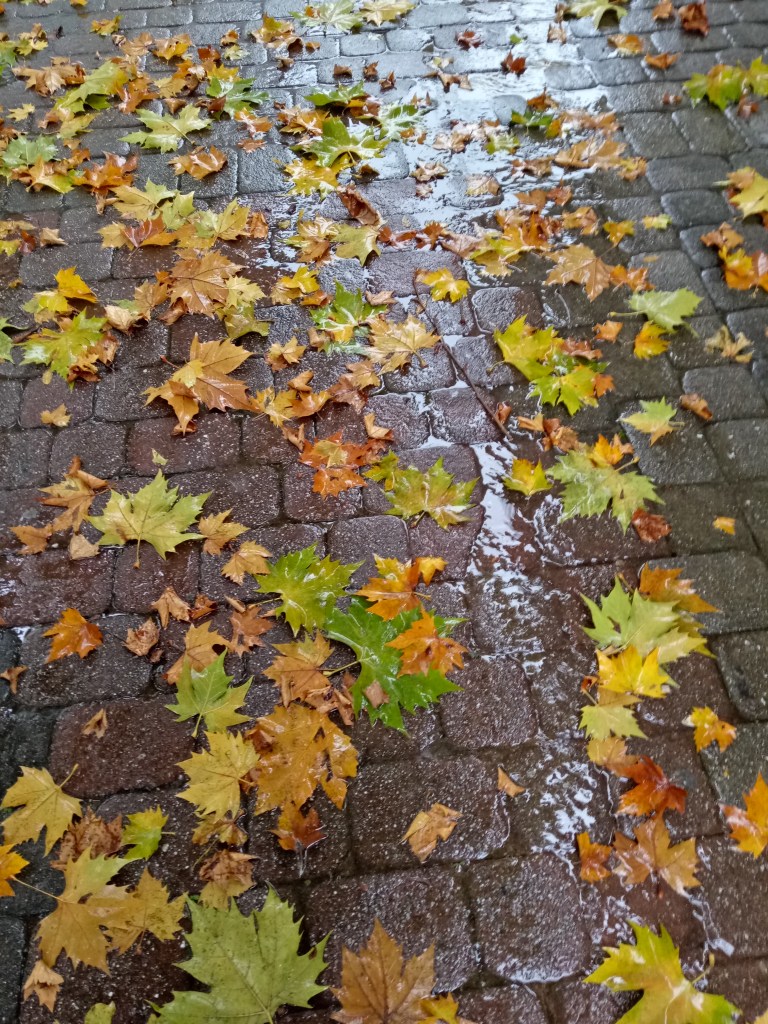
What I find fascinating is that they have an original stereoscope from the late 1800s. The woman takes it out and lets me handle it! She shows me how to insert various pictures with double left and right images, which when viewed, emerge in 3D. She is particularly proud of the first one she produces, after finding out I am Australian. I am momentarily puzzled then realise I am looking at a bunch of kangaroos in 3D. Overall it is a fascinating exhibit. By the time I drag myself away from there, the rain has stopped and my walk home is through the pretty fallen autumn leaves.
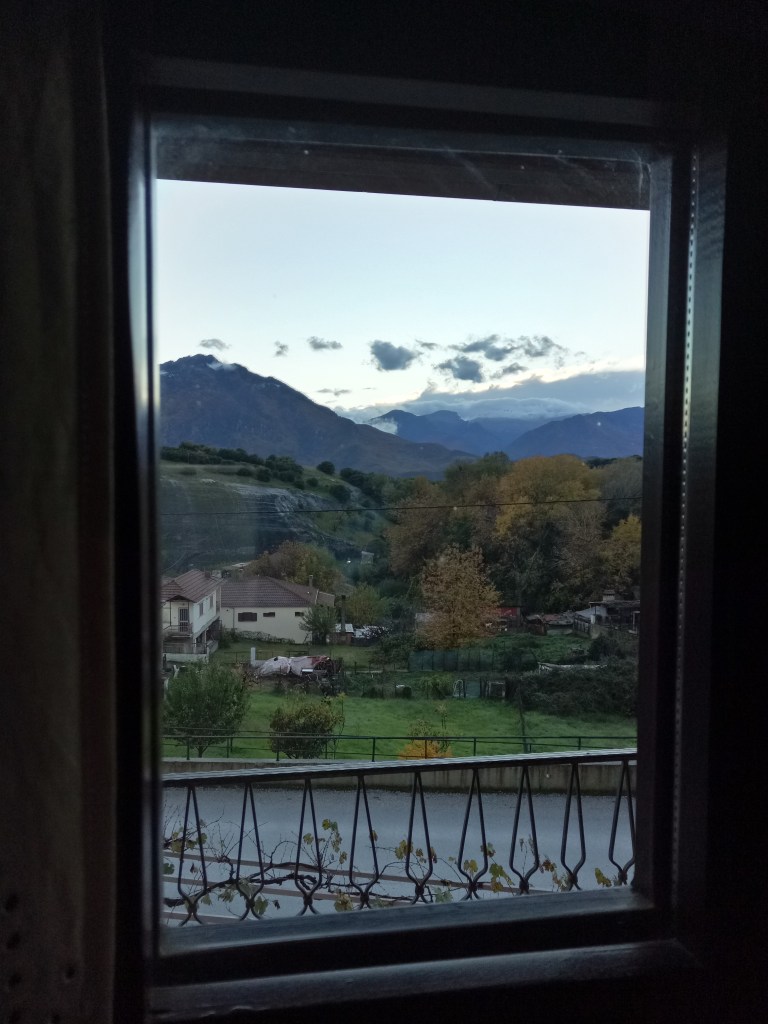
I wake on my last day to another downpour so I decide to stay home and rest; I have seen what I came here for. The sun makes an appearance, enough to reveal that the rain had brought a light dusting of snow to the nearby mountains.
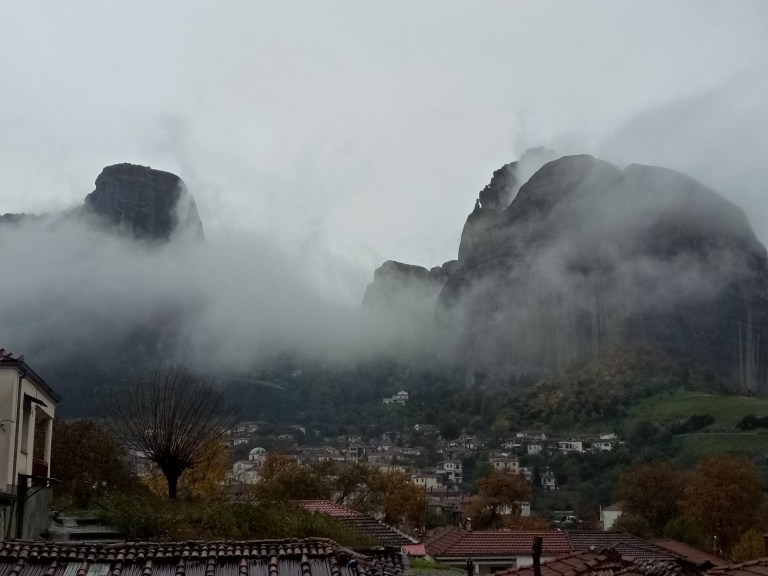
The day I leave dawns bright and sunny, of course. I am heading to the capital of Athens -an all day bus trip. But before the taxi arrives to take me to the bus depot, I have time for one last glimpse of the town from my window, and the rocks from my terrace before I go.
 Jen's Magic Carpet Ride